The first point to make is that this deal is a carve up between Trump and Putin. It puts Ukraine in an invidious position and makes it hard to accept for its failure to include Ukraine in the negotiations.
With Trump threatening to hang Ukraine out to dry if it doesn’t accept the deal by Thanksgiving (perverse as that is, but what should we expect from a pervert), it is no wonder that Zelensky and European leaders are in a spin.
As details emerge of this deal, we can see Trump’s fingerprints all over it. The key points appear to be:
Territorial concessions: Ukraine would formally recognise Russian control of Crimea and the occupied parts of Donetsk, Luhansk, Zaporizhzhia and Kherson, while Russia would retain de‑facto authority over those regions.
NATO status: Ukraine would be barred from joining NATO, though it would receive “unspecified security guarantees” from the West.
Sanctions and economic ties: Existing sanctions on Russia would be lifted, and the United States would resume cooperation with Russia on energy and other industrial sectors.
Energy arrangement: The United States would take operational control of the Zaporizhzhia nuclear power plant and supply electricity to both Ukraine and Russia.
Security guarantees: Western countries would provide security assurances to Ukraine despite the loss of NATO membership, aiming to prevent further aggression.
Frozen Russian assets: These assets are to be used to help rebuild Ukraine, with the USA overseeing this and taking 50% of any profits made.
This smacks of the same sort of approach as Trump has exhibited towards Gaza. It takes no account of the views of the innocent civilians living in the areas being carved up. It treats the areas as little more than real estate and business opportunities, driven as ever by the greed and profit-motive that seems to be the only thing that motivates Trump to get involved in anything.
Of course, the citizens of Ukraine and Russia will naturally be relieved at the end of a war that has had such dire consequences in terms of loss of lives and damage to property, but it seems they will get very little from this deal.
The causalities to date are truly horrific. I have seen estimates ranging from 800,000 to 1 million dead on the Russian side, with 400,000 to 700,000 dead on the Ukraine side. There are tens of thousands missing and unaccounted for too. Add to this the injuries and long-term disabilities, the displacement of people from their homes leading to a mass exodus of refugees mostly into EU countries and the mental health impacts of all this and conscription, and the human costs are staggering.
And then there is the huge damage to infrastructure, homes, and the environment to consider. And all for what? Answers on a postcard please! It is easy to understand why the majority of Ukrainian and Russian civilians want a negotiated peace desperately.
But Starmer and the EU leaders are opposed. The official line is that this is because they are concerned for the Ukrainian people who should be involved in negotiations and who can’t be allowed to have sacrificed so much in vain. It is nothing to do with (officially) the massive rearmament programme and the convenient excuse to increase military spending while continuing to inflict austerity on their people. European leaders are now committed to getting themselves on a war footing and to continuing the expansion and strengthening of NATO. Ukraine is now the victim of a proxy war between Western Europe and Russia, to all intents and purposes. And Trump is lapping up all involved sucking up to him, metaphorically fellating him even, as he relishes effectively franchising out USA military operations in Europe while extracting great economic and political leverage. If he is to keep USA committed to NATO, it is going to be on his extortionate terms. Otherwise, he’s quite willing and capable of standing by as Europe crashes and burns.
Thus, for the time being at least, it is in the interests of Zelensky, the EU leaders and Starmer to keep the war going. Zelensky is in deep shit when the conflict ends. He has been haemorrhaging popularity across the country and faces a huge corruption scandal. He needs to win the war to survive and can only do that with NATO backing. The European members of NATO are more than happy to provide assistance and weaponry but are rightly wary of allowing it to escalate into full-blown war between them and Russia, mainly for fear of near inevitable nuclear escalation.
Things have reached something of a stalemate and Trump, ever the opportunist, sees now as a time to force the hands of Zelensky and Putin. That it will likely look similar to the terms on the table four years, rendering the immense losses since pointless, is just another layer of tragedy.
There had been violent conflict over the Donbas for years, with legitimate concerns in the Russian speaking population over rights and language. Russian long-standing opposition to the expansion of NATO was never properly acknowledged either. There is no evidence that NATO poses any sort of existential threat to Russia, but independent analyses (e.g., the Quincy Institute) note that NATO’s combined conventional forces, especially airpower and advanced missile systems, far exceed Russia’s current operational capacity. In a hypothetical full‑scale NATO‑Russia war, Russia would likely suffer decisive losses, which underpins its “existential” rhetoric. But it also underlines the USA’s critical role in determining the balance of power. Trump seems intent on maximising the leverage this gives him on both sides for his own benefit and what he perceives as the USA’s benefit.
Zelenskyy addressed the nation, saying Ukraine was faced with a choice of “losing our dignity or the risk of losing our key partner”. He spoke of an extremely difficult week ahead, and of unbearable pressure being put on Kyiv.
Trump, for his part, is in a hurry, reportedly keen to get a deal done before Thanksgiving next Thursday, and perhaps with one eye on the “Fifa peace prize”, apparently created solely as a gift to his ego, which he is expected to be given at the World Cup draw in Washington DC on 5 December.
As the Grauniad’s Shaun Walker put it a few days ago:
“For all the public bravado, there has been a private admission in some parts of the Ukrainian elite that a deal may need to be done sooner rather than later, even if everyone sees Moscow as a bad-faith negotiating partner.”
Thus, this may well prove to be Trump’s crowning achievement, not that he has any interest in the suffering born by the people on the ground or their futures ahead. Given that the region is now awash with weaponry, real long-lasting peace is highly unlikely. And given that the tensions and paranoia across Europe have been cranked up so high, we will continue to welfare budgets sacrificed for warfare spending.
As ever, it is the military-industrial complex and its doyens that are the only ones to gain anything from such conflicts.
This was great news on so many levels. First and foremost, with most polls I saw having Deform UK slightly ahead, there is the huge relief in seeing them comfortably pushed back into second place in the end.
The poll also supports the growing evidence that the Conservative Party is a ‘dead man walking’; well, just about staggering. As far as Wales is concerned, it may finally collapse into its final resting place in next year’s Senedd elections. Fingers crossed!
Leanne Wood established Plaid Cymru as a left of centre eco-socialist leaning party, but one that still harboured some right-wing nationalists. It has taken a long time for it to gain credibility as a genuine, trustworthy, left of centre party. When Leanne stepped away it lost momentum for a while. But now, as Welsh Labour’s treachery and role in undermining the Corbyn project, that had the overwhelming support of socialists across Wales, and their consequent support for the disgusting knight of the realm, Starmer, who actively purged true socialists from the Labour Party, it is now clear that the Welsh public have had enough.
And Labour look destined to receive a mighty, long-overdue comeuppance next year too. This is a hugely emblematic result that signifies, I believe, that the people of Wales now have the courage to re-assert themselves as pioneers of progressive change. Remember that the Chartist movement took root in South Wales; that the Merthyr Rising was a key staging post in the establishment of Trade Unions; and, that the NHS was born in Wales. This is why the Labour Party was for such a long time the party of Wales. And it is why ever since Welshman Neil Kinnock scrapped Clause 4 and laid the groundwork for the shift right that became entrenched by Blair (and now re-inforced by Blair v.2.0 Starmer) it has slowly drifted away from serving the interests of the Welsh people.
Thus, this by-election was always a two horse race between Plaid Cymru and Reform UK. The full Senedd elections next year look set to be the same, although Labour will not go down without a fight, and that may well let Reform UK in, in quite a few places at least.
Reform UK are a problem that is not going away any time soon. They are riding the wave of right-wing populism that has swept vast parts of the globe by offering the tried and tested formula of simplistic scape-goating of vulnerable minorities allied with MAGA (Make Anywhere Great Again) mentalities of bringing back the ‘good old days’, without pointing out just who benefitted most in those ‘good old days’ before free health care for all, before ‘women’s liberation’, before strong trade unions, before environmental protection measures.
The turn out in this by-election was encouraging, although scraping 50% is hardly impressive. But is double that of many by-elections. And it brought out enough thinking people to repel Reform. Farage said that they had a target of getting 12,000 votes, believing that would be enough to win. They did indeed get 12,000 votes but the higher than anticipated turnout saw PC surge from a projected 11,000 votes to a resounding 16,000 votes in the end. Fear of the prospect of Reform winning would seem the likely prompt that 5,000 people needed.
Seeing some to the BBC interviews with Caerphilly residents today (the day after the election) who didn’t vote offers a bit more cause for optimism. All the ones I saw were pleased that Reform didn’t win. One was a guy his 60s who had always voted Labour, had given up on them, but couldn’t bring himself to vote for anybody else. Another was a 16 year old school lad who said he didn’t feel able to vote because he didn’t know enough. He said most of his mates were the same, and that he felt the voting age should still be 18, but did also say that those he knew that had voted had voted for Plaid Cymru. This anecdotal evidence suggests to me that PC do have scope to focus on these key demographics to generate more support next year. I hope they are taking note.
Finally, let me say how pleased I was for Lindsay Whittle, the winning candidate. The 72-year-old candidate, has been involved in electoral politics in Caerphilly for decades. He has stood in council elections 18 times, for Westminster 10 times, and for every Senedd election in the last 26 years. He previously sat as a regional MS from 2011 to 2016. He may not exactly be the future of Welsh politics, but he is living proof that commitment and dedication can pay off. I am sure that Caerphilly have themselves a wonderful advocate for the town who will repay their faith in him.
I had the pleasure of attending a talk by Brian Klaas at the Humanist UK Convention in Cardiff in 2024, so when his new book, Fluke: chance, chaos, and why everything we do matters, came out a few months ago, I got a copy and have just started reading it. Within a few pages I am inspired to write this blog.
He opens with a story I first came across when I visited Japan in 2003. The story starts in October 1926 (a month before my father was born) when Mr H.L. Stimson, a lawyer from New York, took his wife on a romantic vacation to Japan, where they fell in love with Kyoto’s pristine gardens, magnificent historic temples, and rich heritage, just as I did.
Fast forward nnnnnineteen [sic] years and Stimson, a lifelong Republican, had become Secretary of War under Franklin D. Roosevelt, and then under Harry S. Truman when FDR died in April 1945.
Four weeks after FDR died saw the Nazis surrender and the end of the war in Europe. The focus now shifted to the Pacific and the pressure was on to bring the war of attrition there to an end. An opportunity was glimpsed to bring the Japanese to their knees by deploying ‘The Gadget’ that scientists and the military had been working on in a remote outpost in the deserts of New Mexico.
Despite no successful testing having taken placed, it was concluded that they might as well determine which of the two prototypes is most effective by dropping one of each Japan. The Target Committee therefore needed to come up with the two target cities. Kyoto came out as by far the militarists’ number one target as it was the home of Japan’s most modern warplane factories, was an intellectual centre at the forefront of pioneering technology and a cultural centre and former capital city. The second target was to be Kokura, housing the country’s largest military arsenal. The reserve targets were Yokohama and Hiroshima.
This list of four targets was passed from the Target Committee to Truman’s cabinet for ratification, at which point War Secretary Stimson vetoed the bombing of Kyoto altogether. After much toing and froing, it was agreed that Hiroshima would replace Kyoto as target number 1, while Kokura remained target number 2, with Nagasaki creeping onto the reserve list alongside Yokohama.
And so, on August 6, 1945, Little Boy fell from the Enola Gay, not on Kyoto, but on Hiroshima, killing 140,000 people, mostly civilians going about their daily lives. Meanwhile the civilians of Kyoto escaped this fate because Stimson had had a lovely time there 19 years previous.
Three days later, on August 9, Bockscar dropped Fat Man, not on Kokura, but on Nagasaki because of unexpected cloud cover in the area that did not quite extend as far as Nagasaki. Such small details determined which 80,000 ordinary Japanese folk died that day. Those clouds saved Kokura’s residents and condemned those of Nagasaki to death. To this day, the Japanese refer to “Kokura’s luck” whenever someone unknowingly escapes a disaster.
Of course, although minor details and chance events influenced which city’s populations would be annihilated, the decision to use these weapons of mass destruction at all was the culmination of a near-infinite array of arbitrary factors that lead to the rise of Emperor Hirohito, the education of Einstein, the creation of uranium by geological processes millions of years ago, etcetera, etcetera.
Whenever we explore anybody’s personal and family histories, we are likely to find numerous examples of Kokura’s luck. We all owe an inordinate amount to luck in ever being born at all, let alone to all the good (and bad fortune) in our lives.
Klaas puts it like this:
“When we consider the what-if moments, it’s obvious that arbitrary, tiny changes and seemingly random, happenstance events can divert our career paths, re-arrange our relationships, and transform how we see the world. To explain how we came to be who we are, we recognise pivot points that were often out of our control. But what we ignore are the invisible pivots, the moments that we will never realise were consequential, the near misses and near hits that are unknown to us because we have never seen, and will never see, our alternative possible lives.”
Klaas goes on to make the following logical and pretty darn obvious point, that really got me sitting up and taking notice:
“There’s a strange disconnect in how we think about the past compared to our present. When we imagine being able to travel back in time, the warning is the same: make sure you don’t touch anything. A microscopic change to the past could fundamentally alter the world. You could even accidentally delete yourself from the future. But when it comes to the present, we never think like that…. Few panic about an irrevocably changed future after missing the bus. Instead, we imagine the little stuff doesn’t matter much because everything just gets washed out in the end. But if every detail of the past created our present, then every moment of our present is creating our future too.”
That’s a pretty sobering thought, isn’t it? I don’t think Klaas is suggesting we should get paranoid about the implications of every moment of the day (that way madness surely lies) but it does mean that much smaller things than we can imagine can have significant consequences and following this line of thinking through it means that the deliberate actions we take almost certainly will have knock-on consequences way beyond what we imagine they do. That is a very encouraging thought, isn’t it? Especially for activists that hope to change the world but struggle to see the impacts they are making in perhaps a wider perspective or longer term than we look for.
“I am backing myself to be of a rare generation that suffers no major calamity in my lifetime. I hope to avoid direct involvement in war; to avoid being forcibly relocated; to avoid having to source my own food and collect my own water; and to avoid witnessing the breakdown of society around me. I have a sporting chance, I reckon.”
The odds have lengthened considerably in the intervening years. In this time, we have seen multiple genocides, such as in Myanmar, Sudan, Syria, Central Africa and, of course, Palestine. We have seen negligible progress in averting climate catastrophe. We have seen war in Europe. We have seen a groundswell of right-wing populism around the world with fascism raising its ugly head again in Europe and other continents, including in the USA. And Putin has his hand hovering over the big red button. Sadly, technology has moved on such that the frequent cloud over South Wales cannot save us this time.
I am writing to demand immediate action is taken to ensure that Aston Villa’s match with Maccabi Tel Aviv on 6 November does not go ahead. The FA and UEFA must work to cancel the match and expel Israel from membership from international footballing bodies. If this does not happen, Aston Villa FC must refuse to host and play the match.
Israel’s genocide against Palestinians in Gaza has killed many tens, if not hundreds of thousands of Palestinians, including many hundreds of Palestinian footballers. It has annihilated Gaza’s footballing infrastructure such as stadiums, training facilities and pitches.
In the occupied West Bank, Israel has systematically targeted Palestinian sports infrastructure, while its military invasions of towns and refugee camps have killed scores of Palestinian footballers. Last year, Israeli forces deliberately destroyed Jenin Municipal Football Stadium during their military offensive on the city.
Allowing Israeli football teams to compete in international competitions sanitises this horrific violence and allows Israel to cynically present itself as a normal country, obscuring the truth that it is carrying out a genocide in Gaza, and imposing a regime of settler-colonialism, military occupation and apartheid against Palestinians.
The Israel Football Association directly participates in Israel’s crimes against Palestinians. It contains at least six football clubs based in illegal Israeli settlements on stolen Palestinian land in the occupied West Bank. These football teams are part of the infrastructure of Israel’s military occupation, ruled illegal by the International Court of Justice.
Maccabi Tel Aviv has itself been directly involved in Israel’s atrocities. The club has sent “care packages” to Israeli soldiers committing genocide in Gaza and organised videos of club employees serving as Israeli soldiers as motivation ahead of matches.
Moreover, the club’s fans have a long history of anti-Palestinian racism and violence. This was exemplified in Amsterdam last year, when its fans marauded through the streets, attacking residents while chanting genocidal slogans. If the match goes ahead these fans will descend on Birmingham, putting local residents at risk of racist violence.
I am sending this letter to the FA, UEFA and Aston Villa FC to ask that each takes action respectively to ensure that the match does not go ahead. The FA and UEFA must work to cancel the match and ensure Israel is expelled from international footballing bodies. While Aston Villa FC must refuse to host and play the match.8 Min-y-Coed Brackla Brackla
Claims that it’s getting harder for scientists not to believe in God are right-wing Christian propaganda. Discuss.
As part of the research that I am undertaking into human spiritual beliefs, I have been undertaking a series of interviews with people from a range of backgrounds and perspectives.
The most recent interview I did was with a devout Christian physics teacher. These are always fascinating discussions; I have spoken to other religious scientists in the past. I’ll save the full details of these discussions for the book I hope to publish but save to say there was one particular assertion I encountered in this discussion last week that chimed with a few other things that I had heard and read recently.
This physics teacher asserted that the more he grew to learn about physics and its order, laws and patterns, the surer he was that there is a creator god behind it all.
It is essentially an advertorial by its author, Michel-Yves Bolloré, for his new book, ‘God, The Science, The Evidence’ co-authored with Olivier Bonnassies, which I have ordered. I have ordered it because I am intrigued to see if there is actually any substance behind the assertions made in the article that I will shortly dissect for you.
But first some due diligence. I regularly point out to people the importance of checking out sources and looking for hidden agenda. It is also critical to be able to evaluate evidence presented for its rigour and authenticity. And remember, as the great Carl Sagan asserts, extraordinary claims require extraordinary evidence.
First of all, The Spectator as a source. First published in 1828, it has legitimate claims to be the oldest surviving magazine in the world. It is politically conservative, avowedly Tory even, given that editorship of the magazine has often been a step on the ladder to high office in the Conservative Party in the United Kingdom; its past editors include Boris Johnson (1999–2005) and other former cabinet members Ian Gilmour (1954–1959), Iain Macleod (1963–1965), and Nigel Lawson (1966–1970). The former Conservative MP Michael Gove took over from Fraser Nelson as editor on 4 October 2024.
Right-wing populists like Gove, Johnson and Farage have all seen the value of cosying up to Christian churches, aping Trump and his MAGA followers in the USA, as it is another lever to pull in divisive identity politics and scapegoating that is the bedrock of their approaches to building support. It is also why they like to undermine scientific expertise and consensus that undermines their objectives. Climate change scepticism, anti-vaccination propaganda, abortion and fertility rights are all examples that come to mind. Let us not forget that Michael Gove famously said, “I think the people of this country have had enough of experts”.
So, let us now consider the author of this article and book that Gove has platformed in The Spectator. Who is this man asserting it’s getting harder for scientists not to believe in God, Michel-Yves Bolloré?
Michel-Yves Bolloré is a French engineer, entrepreneur, and author known for his work in both industrial innovation and education. He has a strong academic background, holding degrees in computer science, applied mathematics, and business management. Michel-Yves Bolloré is part of the prominent Bolloré family, known for their significant wealth and influence in France. The family’s fortune primarily stems from the Bolloré Group, a conglomerate involved in logistics, media, and telecommunications. The family’s net worth is estimated at $8 billion. Michel-Yves Bolloré’s wealth is intertwined with the family’s business ventures and his own entrepreneurial efforts, contributing to their status as one of France’s wealthiest families. He is a lifelong Catholic. He has lived in London since 2011. He sponsored several Catholic academy schools in London during Gove’s tenure as Education Secretary.
Having presented the factual background to those responsible for this article, I will leave it to you to judge the credentials of the author and publisher, and whether they may have agenda being served by it.
Time to turn to the article itself. I’ll copy a paragraph at a time, in bold italics, then give my evaluation of it.
Many Baby Boomers are sceptical about God. They think that believing in a higher power is probably incompatible with rationality. Over the last few centuries, religious belief has appeared to be in rapid decline, and materialism (the idea that the physical world is all there is to reality) has been on the rise, as the natural outcome of modern science and reason.
Baby Boomers are generally regarded as people born between about 1945 and 1965, so aged about 60 to 80 at the time of writing. Bolloré was born in 1945 and I was born in 1962. We are both Baby Boomers. What does the last census of 2021 reveal about generational differences in having “No religion” (the census wording that would cover people sceptical about God)?
On this population pyramid, Baby Boomers would be aged 56-76 for the coloured bars and 46-66 for the 2011 outline. It is patently clear that currently the generation with the greatest religious scepticism is the 20-40 age group in 2021, whereas the Baby Boomers and their elders are the least likely to report having ‘no religion’ with this being even more strongly so now than ten years previously. The ONS reports that in 2021 18.6% of the population was over aged 65, but only 8.8% of those claiming ‘no religion’ were over aged 65. Overall, 37.2% of respondents claimed ‘no religion’ (a rise 12 % points in 10 years). Meanwhile Christianity fell below 50% for the first time ever, to 46.2% (a fall of 13.1% points in 10 years).
So, it is unclear why Bolloré chooses to pick out Baby Boomers scepticism about God. The majority of younger people are sceptical, whereas the majority of Boomers and older are apparently not!
Perhaps it is something to do with so many eminent and well-known sceptics coming from our approximate generation – Sagan, Dawkins, Dennett, Hitchens, Harris et al. Certainly, I wouldn’t contest the assertion that religious belief has appeared to be in decline, most assuredly in Europe at least, over the last few centuries. That is why we called it The Age of Enlightenment,after all!
As for ‘materialism’, I’m not sure that Bolloré properly understands the term. He says it is the idea that the physical world is all there is to reality. In actual fact, it maintains that all things, including mental states and consciousness, are results of material interactions. According to philosophical materialism, mind and consciousness are caused by physical processes, such as the neurochemistry of the human brain and nervous system, without which they cannot exist.
In other words, matter is the fundamental substance of nature. It holds that the so-called spiritual realm should be knowable and understandable if it exists. It does not preclude science eventually being able to understand it. Not so long ago, quantum physics was the stuff of supernatural fantasy and fiction. Bolloré has a twisted take on such scientific breakthroughs though, as we shall see shortly.
It is not entirely clear from the article (but maybe clearer in his book) just how science informs his worldview alongside his Catholicism, but it is likely be some type of monistic idealism; a philosophical system that emphasises the primacy of a single, unified reality, often identified as the Absolute or Nature, rather than a multitude of separate entities. It asserts that all existence is fundamentally mental or spiritual in nature. In other words, it usually asserts that consciousness is the fundamental substance of nature, with God being the supreme conscious entity that controls the universe.
I’ll allow you to evaluate this dichotomy, while reminding you of Occam’s Razor; a philosophical principle that suggests when faced with competing explanations for the same phenomenon, the simplest one—requiring the fewest assumptions—should be preferred.
But if this scepticism is common among my older generation, times are changing. As we come to the end of the first quarter of the 21st century, the tables are turning – with scientific discoveries making people question the very things they took for granted and thought rational. Perhaps surprisingly, Gen Z are leading the way, purporting that the belief in God’s existence might not be just a trend on the rise – it’s a rationally sound conviction, in line with their attitude towards science and religion.
I think we have established that Bolloré is mistaken in his assertion that scepticism is rife among Baby Boomers and the older generations. So, what about his perceptions of Gen Z? Gen Z covers people born from about 1995 to about 2010, i.e., currently about 15-30 years old. They are the generation considered the first to grow up with the internet and digital technology as a significant part of their daily lives. Contrary to Bolloré’s assertion, the census data above shows this generation to be amongst the most likely to have ‘no religion’. This is a bit simplistic though.
Various studies, including from Humanists UK, reveal that Gen Z have distanced themselves from traditional religious affiliations, but that there is a growing interest in spirituality and the belief in some form of god. This apparent open-mindedness leads them to be open to a much wider range of ideas and influences than us Baby Boomers. This is, of course, not always a good thing as it makes them vulnerable to all manner of conspiracy theories and bad advice. This is why critical thinking skills need teaching from an early age and should be as central to the curriculum as the 3’R’s.
While the findings of Copernicus, Galileo, and Darwin created the impression that the workings of the universe could be explained without a creator God, the last century has seen what I call ‘The Great Reversal of Science’. With a number of break-through scientific discoveries – including thermodynamics, the theory of relativity, and quantum mechanics, plus the Big Bang and theories of expansion, heat death, and fine-tuning of the universe – the pendulum of science has swung back in the opposite direction.
Copernicus’s work that proposed the heliocentric model, placing the Sun at the centre of the universe rather than the Earth, was published shortly before his death in 1543, meaning he escaped retribution from the R.C. Church, but his great work ‘De Revolutionibus’ was placed on the Church’s ‘Index of Forbidden Books’.
Ninety years later, Galileo publicly advocated for the Copernican theory and this led to him being tried by the Roman Inquisition in 1633, and found “vehemently suspect of heresy”. Initially imprisoned, this was commuted to house arrest, under which he remained until his death in 1642.
As for Darwin, there has always been obvious resistance to evolutionary theory from Bible funda(mentalists) that take Bible accounts literally despite the glaringly obvious flaws. The Catholic Church has generally accepted the theory of evolution as a valid scientific explanation for the development of life and sees no intrinsic conflict between faith and science. In essence, God has always remained the fall-back position to explain what science cannot explain. Thus, we saw the emergence in the 19th century of the “God of the Gaps” concept. https://en.wikipedia.org/wiki/God_of_the_gaps This is a theological concept that emerged in the 19th century and revolves around the idea that gaps in scientific understanding are regarded as indications of the existence of God. This perspective has its origins in the observation that some individuals, often with religious inclinations, point to areas where science falls short in explaining natural phenomena as opportunities to insert the presence of a divine creator.
Every big scientific breakthrough, some listed by Bolloré, does not see any sort of ‘reversal of science’, but simply a re-assertion that God is still a relevant and an available answer to questions still out of reach of science. The phrase “reversal of science” implies a misunderstanding of scientific progress, as scientific theories evolve based on evidence rather than simply reversing previous conclusions. A non sequitur occurs when a conclusion does not logically follow from the premises, which can happen if one assumes that scientific change is merely a reversal rather than a complex process of discovery, validation and re-evaluation.
More and more convincingly, and perhaps in spite of itself, science today is pointing to the fact that, to be explained, our universe needs a creator. In the words of Robert Wilson, Nobel Prize winner for the discovery of the echo of the Big Bang in 1978, and an agnostic: ‘If all this is true [the Big Bang theory] we cannot avoid the question of creation.’
Sure, science cannot avoid the question of what created the Big Bang, but there is an enormous leap from this to any sort of conclusion that there was a creator that in any way resembles most people’s idea of God.
Bolloré is being disingenuous to suggest that science is struggling for ideas about what came before the Big Bang. Some theories propose that the universe existed in a different state prior to the Big Bang, possibly involving a cold, dark universe or a phase of cosmic inflation that preceded the hot Big Bang event. This BBC Sky at Night Magazine article presents a few more ideas currently being explored.
But I struggle to find many reputable scientists that seriously propose a creator God as the explanation. Why is that? Science does not inherently reject the idea of a creator God; rather, it focuses on explaining the natural world through empirical evidence and does not address supernatural claims. ‘Supernatural’ simply means ‘I believe this despite the lack of any verifiable evidence’. If these phenomena exist, they are natural and should be able to be evidenced eventually. The work of microbes was deemed supernatural until we could see them. ‘Alternative medicine’ that works is simply medicine.
Many scientists and religious individuals find ways to reconcile their beliefs with scientific understanding, suggesting that science and faith can coexist. Science is simply a methodology to interrogate evidence and come to reliable conclusions. Faith is simply an attitude of mind towards things that cannot be evidenced (yet). They are clearly not mutually exclusive.
It is true that the existence of God cannot be proved incontrovertibly. While absolute proofs only exist in the theoretical domains of mathematics and logic, relative proofs are what we normally deal with, and what is generally considered ‘evidence’ in everyday life. If, like Richard Dawkins, we take a rational and scientific approach to the existence or non-existence of God, then we should only be persuaded by multiple, independent, and converging pieces of evidence.
Not much to argue with here other than some semantics. I would dispute that it is true that the existence of God cannot be proved incontrovertibly. Why can’t it? But it is true that there has been no verifiable evidence of God’s existence to date.
Yet again, Bolloré misappropriates words. What is considered ‘evidence’ in everyday life simply is not the same thing as what is regarded as valid evidence in scientific enquiry. In everyday life, and indeed even in courtrooms, casual and/or distant recollections, hearsay, gossip and circumstantial guesswork may all be deemed evidence. Most would agree that such things are weak evidence, but they are relied upon in the absence of better evidence, or the ability to understand better evidence, especially when there is a motive to come to a certain judgement.
There is, of course, such a thing as bad science too, undertaken without due attention to the scientific method, often with motives to manipulate findings. Good scientists will not jump to conclusions about multiple, independent and converging pieces of evidence. They will use this evidence to construct testable hypotheses and then seek to replicate and augment the evidence that supports the hypothesis with a high (but never absolute) degree of confidence. If God exists, then it is down to the proponents of the God hypothesis to produce the evidence. That evidence can then be interrogated and either corroborated or rejected accordingly. It is an impossible, illogical task for anyone to prove that something that doesn’t exist indeed doesn’t exist, as explained eloquently by Bertrand Russell with his Cosmic Teapot analogy.
Scientists across many fields of inquiry are now coming round to the idea that the thermal death of the universe and the Big Bang are strong evidence that our cosmos had an absolute beginning, while the fine-tuning of the universe and the transition from inert matter to life imply (separately) some more extraordinary fine tuning, showing the intervention of a creator external to our world.
Scientists across which fields of enquiry? Relevant fields of enquiry? ‘Fine tuning’ is the personification of physics processes that we are only just beginning to grapple with. None of this ‘shows’ the intervention of a creator at all. The key word that undermines this assertion is “imply”. Implications, at best, suggest things. They never “show’ anything conclusive.
With sets of converging evidence from different scientific disciplines – cosmology to physics, biology to chemistry – it is increasingly difficult for materialists to hold their position. Indeed, if they deny a creator, then they must accept and uphold that the universe had no beginning, that some of the greatest laws of physics (the principle of conservation of mass-energy, for example) have been violated, and that the laws of nature have no particular reason to favour the emergence of life.
“Converging evidence” of what exactly? Maybe I need to read the book to find out what this vague assertion is getting at. Upholding that the universe had no beginning is a possibility that has not been discounted. Anything infinite is difficult for ephemeral lifeforms (all life) to grasp I guess. And let us suppose for a moment that there was a creator God; does it necessarily still exist? Who or what created that God? What was it doing for the eternity before it came up with this universe? Why did it create a single species ‘in his likeness’ on one insignificant pale blue dot in the vastness of the cosmos? It raises way more questions than it answers, and I think Occam’s Razor should come into play again.
Weighing up the evidence on each side of the scale is a matter of intellectual rigour, and the question ‘Is there a creator God?’ is one we should all be asking ourselves, with serious implication for every one of us. What’s intriguing is that it’s actually the youth, who you’d think would be more preoccupied with more mundane and practical concerns, that are leading the way. Last August, a YouGov survey revealed that belief in God has doubled among young people (aged 18-24) in the last four years, with atheism falling in the same age group from 49 per cent in August 2021 to 32 per cent. Interpreting the data, Rev Marcus Walker, rector of St Bartholomew the Great in the City of London, mentioned that young people ‘seem really interested in the intellectual and spiritual side of religion’.
Seems a bit rich for Bolloré to invoke intellectual rigour, given what we have established so far! Weighing up the evidence available on the question ‘Is there a creator God?’, however, is not that challenging. It took a while to come, but there is the typical threat of judgement by a vindictive Catholic God in the words “with serious implication for every one of us” if we dare deny his existence (it’s always a ‘him’ in the Catholic imagination). A lack of evidence becomes a call to faith; a faith in that all-powerful, omnipotent, loving creator of all things bright and beautiful (as well as childhood cancer, humans imagining thousands of different deities, and Satan), who refuses to show himself but needs his ego massaging regularly lest he condemn us to everlasting hell.
I’m not going to disagree with Rev Walker though. It is indeed my experience that many young people are interested in the intellectual and spiritual side of religion, as I am! It is fascinating stuff. But I hope he doesn’t think that this will translate into a reversal of the decline in Christianity in the UK.
Another report from the think tank Theos revealed that Gen Z have a more balanced perspective towards the relationship between science and religion. Over one in two young people think religion has a place in the modern world, and the majority (68 per cent) of Gen Z respondents believe that you could be religious and be a good scientist.
Hmm.. Theos! Founded in 2006 with the support of the then Archbishop of Canterbury, Rowan Williams, and Archbishop of Westminster, Cormac Murphy-O’Connor, it is avowedly ecumenical but committed to traditional Christian creeds. It has strong associations with conservative Christian organisations and has been criticised for a lack of transparency in its funding. Wikipedia states that Theos is a project of, and core funded by, the British and Foreign Bible Society. This charity somehow funds translation, production and distribution of free bibles around the world, as part of the United Bible Societies network. The funding of all of this is very opaque!
And just for clarity (not offered by Bolloré), the report mentioned in this paragraph is not exactly ‘another report’, but a report on the findings of the YouGov survey mentioned in the previous paragraph, which was commissioned by none other than the British and Foreign Bible Society.
That about half of young people think religion has a place in the modern world is a classic example of question framing. You only have to watch the daily news, currently dominated by two Abrahamic religions (i.e., worshipping the same God) wanting to annihilate each other in Palestine to see that religion very much occupies a place in the world today. As in this example, it is not a pretty place much of the time. Had the question been framed as ‘should the major world religions of today have a place in the world of tomorrow?’ we might well have seen a very different response.
That 68% of Gen Z think you can be religious and a good scientist at the same time is disappointingly low if anything. I think we established earlier that these two intellectual positions are not mutually exclusive. We have all surely received great medical care from great medics that have migrated here from all corners of the world, with many patently adhering to many different creeds, superficially at least. I remember being under the orthopaedic care of Dr JPR Williams (iconic Wales rugby full-back of the 1970s) in Bridgend, and he always had a Bible handy. The only time I saw him use it though was when he used it to whack and disperse a ganglion on my ankle!
Far from painting a picture in which the number of people believing in God is dwindling (which has been the usual narrative in the last century), this research suggests we are at the dawn of a revolution – one in which belief in God is not simply supported by science, but embraced by younger generations, too.
Given what we know of Bolloré’s background and beliefs, I am led to believe that he is deluding himself into believing that young British people will flock back to the Catholic church. There has been evidence of higher attendances in Catholic Churches, with the increase being in young adults, but these have been primarily from east European migrant workers of strictly Catholic upbringings. It saw the rise of Polskie Sklepy (Polish shops) in every town too. They have largely disappeared quicker than they arrived thanks to Brexit. The claim that ‘belief in God is [now] supported by science’ is the sort of ridiculous claim we hear on a daily basis from President Trump. I’ll say no more than that.
In general, Gen Z seems to have positive and hopeful view of science’s impact on the world. According to recent figures, 49 per cent of Gen Z trust scientists and academics the most to lead global change, far ahead of politicians (8 per cent) and world leaders (6 per cent) (WaterAid, 2025). And yet, they are still spiritually curious: their trust in science doesn’t preclude them from wanting to explore spirituality and contemplating something bigger than our universe.
Hallelujah! Nothing contentious here (other than relying on data from WaterAid on such matters, not that I have anything against WaterAid). It appears that 0% thought religious leaders should lead global change. Strange that Bolloré failed to notice that.
Could they be the ones showing older generations a new way forward, one in which religion and science can coexist? And, more to the point, we now have the scientific evidence that would support a big shift in perspective. In the words of 91-year-old Carlo Rubbia, Professor of Physics at Harvard and Nobel laureate: ‘We come to God by the path of reason, others follow the irrational path.’
There is nothing new in religion and science coexisting. They have been doing it for centuries; most certainly throughout the entire lives of us Baby Boomers. The evidence that Gen Z is more curious about spirituality and matters currently beyond the scope of science is neither surprising (in this age of ready access to information) as Gen Z have the tools and the wherewithal to explore anything they are curious about in ways that were impossible to imagine (fanciful notions, erring towards being supernatural) when Bolloré and I were their age.
Thankfully, I can find no evidence that young people are flocking to the Roman Catholic Church that I left behind at 14 (after a couple of years of learning about science). I would concede that there is greater chance of such evidence being forthcoming than there is of verifiable evidence of a creator god.
As for Carlo Rubbia, he, like Michel-Yves Bolloré, is a lifelong Catholic; eleven years older than Bolloré. Culturally it would have been very difficult for Rubbia to not be a Catholic growing up in Italy, just as it was for my father growing up in Poland. I am therefore not at all surprised that this brilliant physicist still clings to his religion and cannot help falling for the ‘God of the Gaps’ fall-back. Indeed, this quote from him (in response to a magazine asking him “Do you believe in God?”) is nigh on identical to what I got from the physics teacher I interviewed recently:
“The more you observe nature, the more you perceive that there is tremendous organization in all things. It is an intelligence so great that just by observing natural phenomena I come to the conclusion that a Creator exists.”
Sounds like a hunch from an observation to me. He has no better explanation. I find the title of his book intriguing: “The Temptation to Believe” (published by Rizzoli but appears to be out of print). He has patently succumbed to the temptation.
To return to my subtitle at the top of this piece, and my assertion that the claims that scientists are finding it harder to not believe in God are little more than right-wing conservative Christian propaganda, I think we can all see evidence for this in the way the media presents debates on issues such as climate change (there is no debate on it scientific circles), abortion and reproductive rights (morality derived from the Old Testament) and ‘traditional family values’ (that seem to embrace misogyny and homophobia). This is rife in the US, but present in the UK too.
The conservative right are not people whose morality I respect. They certainly do not get it from the Jesus dude in the Bible. For example, many of Jesus’s teachings resonate with socialism: in one story —told in three variants in three books of the Bible — a rich man asks Jesus what he needs to do to be perfect. Jesus says, ‘sell all your possessions and give the money to the poor’. We can imagine the reaction of people like Trump and Rubio, Boris Johnson and Gove and other economic elites (billionaires like Bolloré) to being confronted with a message like that!
When Donald Trump was campaigning for president, he claimed he loved the Bible but then was unable to elaborate when asked about his favourite verses. His supposed love for the Bible helped him fool the masses and get him elected. Similarly, U.S. Senator Marco Rubio garners support from conservative Christians by sending out periodic Bible tweets, very cutely selected.
India’s Prime Minister Narendra Modi also regularly presents himself as a religious devotee, despite his clear economic conservatism and disdain for the poor. His image and messaging is way more prevalent all over India than any religious messaging. It was on every major throughfare and most public buildings I saw in India first hand.
Despite growing scientific evidence about consciousness and related spiritual concepts and the ongoing political relevance of religion, many intellectuals or people affiliated with progressive movements still shun concern with human spirituality. The irony of this dismissal is that it is a losing political strategy. It allows people like Trump and Modi to exploit human spirituality and manipulate people’s spiritual sensibility, gaining support from the very constituency they will inevitably go on to eviscerate. They use it to ‘persuade turkeys to vote for Xmas’, in other words.
I contest that it is not actually any harder for scientists to not believe in God, but I also contest that it is certainly getting harder for political progressives to ignore questions of human spirituality and the role that religion plays in people’s lives, for better or worse.
The artwork below appeared on the wall of the Royal Courts of Justice after almost 900 demonstrators were arrested last Saturday (in similar fashion the 500 I reported on the week before). Banksy confirmed it was his handiwork on Instagram
Responding to Banksy’s work, a spokesperson for campaign group Defend Our Juries, which organised Saturday’s rally, said it “powerfully depicts the brutality unleashed by Yvette Cooper on protesters by proscribing Palestine Action”.
They said: “When the law is used as a tool to crush civil liberties, it does not extinguish dissent, it strengthens it.”
“As Banksy’s artwork shows, the state can try to strip away our civil liberties, but we are too many in number and our resolve to stand against injustice cannot be beaten – our movement against the ban is unstoppable and growing every day.”
The artwork was scrubbed off within about 48 hours (see above), as it was inevitably going to be, being on a listed building, but the symbolism of its removal, on top of the symbolism of the artwork itself, strongly resonates with people, like myself, concerned about the attempts to quash and silence dissent in this country right now.
Starmer and his ‘starmtrooper’ cabinet colleagues have become prone to misusing legislation to impose an Orwellian agenda of silencing grassroots opinion. They cut their teeth first by thoroughly purging and/or silencing the left wing of his own party through suspension and expulsions on trumped up charges. The extent of this is that once lifelong Labour Party members are now seeking to rehome what were once that party’s core socialist values and defence of the working classes and disadvantaged in an altogether new party of the left (provisionally named ‘Your Party’). This leaves Starmer’s Labour Party with a moral vacuum at its centre which allows it to be complicit in the Zionist atrocities being committed in Gaza and beyond as it prostitutes itself to Zionist and related corporate interests.
Thus, it was able to distort its definition of terrorism to actively support the terrorist state of Israel but proscribe as terrorists UK citizens so appalled at the UK’s complicity in genocide that it dared to damaged RAF property and daub blood red paint on some war planes.
As I’ve reported before, this re-defining of ‘terrorism’ has been criticised and condemned by many, most notably by Volker Turk (UN’s high commissioner on human rights). I would like to believe that Yvette Cooper has subsequently been removed as Home Secretary for growing tired of defending this indefensible authoritarianism.
Volker Turk described the prosription as disturbing, disproportionate and unnecessary.
Starmer’s mob have created a whole raft of new opportunities to silence dissenting voices his Online Safety Act. Superficially, nobody can really argue with an objective of keeping children safe from exploitation and harm online. But is this the only objective of this legislation?
While some will argue that it is “making the internet safer”, it is also destroying hundreds, if not thousands of smaller online communities that simply cannot bear the cost of compliance. This includes registering a “senior person” with Ofcom who will be held accountable should Ofcom decide your site isn’t safe enough. It also means that moderation teams need to be fully staffed with quick response times if bad (loosely defined) content is found on the site. On top of that, sites need to take proactive measures to protect children. Failure to comply can lead to fines of millions of pounds.
Not surprisingly, many law-abiding forum hosts have simply shut down. This from LFGSS, a small one-person passion project for bikers in London:
“We’re done… we fall firmly into scope, and I have no way to dodge it. The act is too broad, and it doesn’t matter that there’s never been an instance of any of the proclaimed things that this act protects adults, children and vulnerable people from… the very broad language and the fact that I’m based in the UK means we’re covered.
The act simply does not care that this site and platform is run by an individual, and that I do so philanthropically without any profit motive (typically losing money), nor that the site exists to reduce social loneliness, reduce suicide rates, help build meaningful communities that enrich life.
The act only cares that is it “linked to the UK” (by me being involved as a UK native and resident, by you being a UK based user), and that users can talk to other users… that’s it, that’s the scope.
I can’t afford what is likely tens of thousands to go through all the legal hoops here over a prolonged period of time, the site itself barely gets a few hundred in donations each month and costs a little more to run… this is not a venture that can afford compliance costs… and if we did, what remains is a disproportionately high personal liability for me, and one that could easily be weaponised by disgruntled people who are banned for their egregious behaviour (in the years running fora I’ve been signed up to porn sites, stalked IRL and online, subject to death threats, had fake copyright takedown notices, an attempt to delete the domain name with ICANN… all from those whom I’ve moderated to protect community members)… I do not see an alternative to shuttering it.”
Of course, the big players can carry these costs and will benefit from losing the competition with myriads of small platforms. And the truly nasty, exploitative operators will either ignore the law or find loopholes. It’s naïve in the extreme to think compulsive, sick abusers will pack it in simply because one channel of operation has become trickier.
… such as anything endorsing Palestine Action
But look how easy it is now for government to closedown dissenting voices. Are we safer or in more danger now that vandals can be convicted as terrorists? Is the internet really safer now that any small community can be closed down as a potential refuge for abusers?
I’ve attended a few of the nigh-on-thirty National Marches for Palestine in London and many others in Cardiff. This is the first that has had me welling up in tears.
The first pro-Palestine demo I attended in London, maybe 10 years ago, had somewhere between 20 and 30 thousand marching. The monthly marches over the last 18 months or so have had between 80 and 200 thousand on them. With the news this week that Netanyahu is about to embark on the last phase of his project to ethnic cleanse the Gaza strip, there was the anticipation that there may be well over 200,000 there today from all over the country.
The whole atmosphere was a bit more intense, it seemed to me, as we slowly made our way from Russell Square to Downing Street, via my old stomping ground of Aldwych and the Strand
I suspect I was not alone on reflecting on the mounting horrors being committed in Gaza, with our government’s ongoing complicity, but also that today also marked the 80th anniversary of the bombing of Nagasaki, three days after the bombing of Hiroshima. These war crimes killed 120,000 people instantly and hundreds of thousands more slowly and excruciatingly due to the aftereffects; more than everyone of us on the streets of London today. We didn’t get to see people dying excruciating deaths on our screens in 1945; most didn’t own any screens back then (there were less than 10,000 televisions in the UK in 1945). Now we get to watch genocide, including the starvation of children, in real time on all our many screens.
Hiroshima or Gaza?
The other undercurrent today was that this was the first time many of us had been on such a demo since the proscription of Palestine Action. Most of those attending would be supporters, in principle at least, of Palestine Action’s cause, but all now were wary of falling foul of interpretations of this and facing the prospect, and consequences, of being arrested, labelled a terrorist sympathiser and facing a potential 14-year term of imprisonment. Add all this together and is it any wonder that the mood was even more sombre than usual.
My sign in Russell Square.
Because of concerns about conflating the issues of the Gaza genocide and the UK civil rights oppression, support for Palestine Action was organised in a totally different way, such that those that didn’t want to get caught up with opposing the proscription were in no danger on the main march. Indeed, the policing of this march was very low key and discreet. This was in sharp contrast to the Palestine Action support protest.
While the National March saw perhaps 200,000+ people congregate in Russell Square to commence the March at exactly 1pm, two miles away in Parliament Square 500 briefed and prepared volunteers awaited Big Ben to chime 1pm, sat down on the grass, and unrolled their own hand-written A2 posters, all saying exactly the same thing:
I OPPOSE GENOCIDE, I SUPPORT PALESTINE ACTION
I got to Parliament Square about 2.30pm by which time those sitting in the square and a whole lot more people, including a lot of journalists and camera operators, were effectively kettled by a ring of around 200 police officers. I asked if I could join my friends inside the cordon and was told in no uncertain terms “No”. When asked why not, all I got from the Met officers was that “A section 13 of the Public Order Act is in place.” When I asked what that was the Met officers refused to say and just said “Look it up”.
I wandered around the cordon until I stumbled across a whole section, in front of the Nelson Mandela and Mahatma Gandhi statues, ironically enough, that consisted of officers from Wales! They were very conspicuous due to the HEDDLU labels, but also much chattier (would you believe that!). Chatting to a few of them, I clarified that my placard would likely not get me arrested today as it is ambiguous enough as to whether I was expressing support for Palestine Action, and they had plenty of unambiguous ones to sort out first. I asked her if I verbally removed the ambiguity and told her I supported Palestine Action, would she arrest me. She said that that still would not be a priority today. Oh well, I tried!
Many of you reading this will know how embarrassed I have become over the years at never having been arrested on a demo. Despite the impression I may have given above, I had already determined that I didn’t really want to be arrested today. I had had a long chat with a couple of the legal observers that are present at all such demos about the changing climate around the criminalisation of protest in the UK, specifically the Palestine Action situation.
The implications of being arrested and either accepting a caution or being prosecuted and found guilty of supporting a proscribed organisation can be dire. It was not anticipated that mere supporters, as opposed to members and/or participating activists, were likely to be jailed, but even a mere caution stays on your record for 10 years and could have serious career and other ramifications for many, and also incur travel bans to many countries. I have no career worries anymore, but I do still have plenty of travel plans!!
The legal advice around being arrested has been the same for years. Below is an up-to-date copy of the cards the legal observers hand out on demos. The only thing that has changed is the phone numbers and email addresses, so if, like me, you have been carrying one of these in your wallet/purse for years, you might want to check you have the current contact details.
I’m sure all of those arrested in Parliament Square today will have had them. Because of the consequences outlined above, the 500 volunteers will have all known the possible consequences and how to handle the near-inevitable arrest. Perhaps because of this, the demographics of these 500 people are a bit different to most people I have seen arrested at demos over the years.
The first person I saw being arrested (above) was this smartly dressed gentleman. I was told that he was a solicitor. Apparently, one of the first arrested, before I got there, had been an elderly gentleman in a wheelchair. I was a bit sceptical of this story initially, but then witnessed many elderly people, especially women in (I’m guessing) their 80s being bundled off into police vans. There were university lecturers, vicars, self-employed professionals like dentists and accountants, many retired people from all walks of life and a smattering of smart, articulate young people all prepared to stand up (or be dragged away) and be counted.
89 years old.
It was this spectacle that I was surprised to find had tears rolling down my cheek at one point. These people were guilty of no more than supporting efforts to end a genocide that is occurring before our eyes. They were being labelled as supporters of terrorism by a government arming the genocidal regime and effectively condoning (through Palestine Inaction) the ethnic cleansing and bulldozing of Gaza to enable its annexation and redevelopment as luxury seafront real estate for wealthy Israelis and American tourists. Trump can’t wait to get involved!
Starmer and Cooper may yet be forced to rescind the proscription of Palestine Action, despite Cooper doubling down on it today. On 30 July, a High Court judge ruled that Palestine Action can bring a legal challenge against the UK government over its designation as a terrorist organisation. This followed a hugely damning statement from Volker Türk, High Commissioner for Human Rights at the United Nations that says:
“UK domestic counter-terrorism legislation now defines terrorist acts broadly to include ‘serious damage to property’. But, according to international standards, terrorist acts should be confined to criminal acts intended to cause death or serious injury or to the taking of hostages, for purpose of intimidating a population or to compel a government to take a certain action or not. It misuses the gravity and impact of terrorism to expand it beyond those clear boundaries, to encompass further conduct that is already criminal under the law.”
This Labour Government is not just nauseating, but it almost as embarrassing as the Johnson government.
Just to lighten the mood a tad, let me share two true stories from today of arrests that made me chuckle. These were not in Westminster Square but on the National March. These were people whose placards were deemed less ambiguous than mine in their support for Palestine Action. Both were dismissed when taken for processing with the arresting officers rebuked for their illiteracy, I warrant. The first went something like this:
That’s one officer now aware of the importance of commas!
The second one I heard about and struggled to believe, but then I bumped into the guy and took his picture! Hopefully you’ll spot the issue quicker than the arresting officer!
But my final memories of the day occurred on my journey back home, and again had me welling up.
The first occurred on the tube from Westminster to Paddington. I was sat opposite a lady wearing a hijab and she read my sign and I saw a tear roll down her face. She stood up to get off at the next stop and leaned forward towards me and simply said “Thank you, thank you”.
The second occurred on the train out of Paddington, less than an hour later. There was a lady about my age, travelling alone, sat across the aisle from me but facing me. This was the conversation, initiated by the lady, with an east European accent:
“Excuse me, can I ask you something?”
“Sure.”
“Do you hate the Jews for what they are doing in Gaza?”
“No, not at all! What is happening in Gaza is not the doing of the Jewish people, but of a genocidal rogue state.”
“Thank you. I agree with you.”
We said no more, and she got off at Reading.
What a day.
PS. A guardian article, a week later, about some of the older generation who were arrested:
I am one of the 600,000+ people that have signed up to be kept informed of developments with the launch of Corbyn’s and Sultana’s new party of the Left. It holds out the hope of an anti-austerity, anti-war and anti-racist party that seeks to tackle the cost of living, reduce inequality, and promote public ownership. As such it certainly ticks a lot of boxes for me. However, I am struggling to get very enthusiastic or excited about it personally. But I do hope that it might just galvanise the young into seeing an opportunity to reshape their futures for the better.
In some ways I think I have never quite gotten over the orchestrated failure of the Corbyn project during his time as Labour Party leader. It was crushed by an obscene MSM campaign of libellous attacks, most notably the ridiculous antisemitic slurs, that were also used by his enemies within the Party, to their everlasting shame. The immediate consequence was the disastrous premiership of Boris Johnson, and then everything that has followed that.
Those largely-the-same Labour politicians and liberal commentators appear to have already settled on their main attack line: support for the Left Party will split the Labour vote and allow Reform to win. That they refused to get into line and support the democratically elected leadership of Corbyn, supported by a huge majority of the membership allowed ‘mini-Trump’ Johnson, seems to be a lesson at least partly learned, if way too late! Hypocrisy to the fore!
In fact, many opinion polls have already indicated potential for Reform to win the next general election, while Labour’s parliamentary representation collapses as a consequence of Starmer’s team consciously courting Reform voters and would-be voters while ignoring those who might back the left. That has failed miserably on its own terms, but it has also widened the audience for a new left party. They have only themselves to blame. Where do they think the Left can turn?
For those left-wingers who remain in the Labour Party, there are two main reasons cited for staying; essentially the same ones I was presented with when I quit the Labour Party after Starmer’s duplicitous campaign to usurp the Labour leadership. One is that recent controversies like the Welfare Bill and the recognition of Palestine illustrate how the Labour Party is not monolithic and still be shaped by pressure from the left through the winning of concessions. The other argument is that Labour retains the reluctant loyalty of many trade unions. But this can’t be taken for granted, especially with a new option, a genuinely socialist party, there to embrace them and their values.
If a year or so of a Starmer government doesn’t prove that the Labour Party is no longer fit for the purpose for which it was created, well, nothing surely will. The new party will need an activist base, and I therefore sincerely hope that those activists will stop pissing in the wind that is blowing through the Labour Party and migrate to where their efforts could potentially yield great gains for those abandoned by the Labour Party and tempted by right-wing populist scumbags (like that other mini-Trump sociopath, Farage) offering simplistic, short-sighted, scapegoating solutions that appeal to those most challenged by the crises at hand.
In any case, left wing pressure is being seen to exert pressure on this right-wing Labour administration from without, way better than from within. A genuinely left-wing party can exert pressure on the Labour government over controversial issues, perhaps even more effectively than, but certainly in allegiance with social movements. The main pressure on Starmer and foreign secretary David Lammy over Gaza has come from the mass movement, finding only a faint echo among Labour MPs.
As for the Trade Unions, Ex-Unite boss Len McCluskey has hinted that trade unions might abandon Labour for Jeremy Corbyn’s new party if it proves “credible,” raising concerns on the left of a historic break in relations. McCluskey, 74, comments heap fresh pressure on Labour as internal divisions widen. Just days ago, Corbyn declared “change is coming” and praised Coventry South MP Zarah Sultana for quitting Labour to help “build a real alternative” to the party he once led. McCluskey, one of Corbyn’s staunchest allies, made clear that trade unions are weighing up their options. “If this new party demonstrates its credible, then trade unions will consider their affiliations,” he warned.
The remaining big trade unions of the working classes, such as Unite, UNISON, GMB and ASLEF are known to have had internal discussions and it is clear that, if they continue to support Labour under its current leadership, they risk becoming complicit in the erosion of worker’s and human rights, and the abandonment of progressive values. The participation of union activists can hugely enrich the new left-wing party, in every sense, giving it political substance and helping it develop roots.
I also know, of course, plenty who prefer to argue for Green Party membership, and see Zack Polanski’s leadership bid as a major opening. The Green Party has many left-wing policies but has never been a coherently or consistently left-wing party. It doesn’t ever present a political platform in class terms like Labour’s 2017 manifesto did: the many versus the few, us versus them. It veers in different directions depending on circumstances. It attracts votes from those who would otherwise vote Labour, but also from those who are more naturally Lib Dem voters. It has long had to contend with ‘Torie-on-bikes’ slurs too.
During Corbyn’s leadership of Labour, the Greens made efforts to attract those who were unhappy with Labour’s leftwards direction. For example, they supported overturning the EU referendum result of 2016. While it made some inroads into urban working-class areas, especially when Will Duckworth was around and working the West Midlands hard, the Green Party continues to have a mainly middle-class base. The kind of working-class towns where Reform poses a serious threat are places where the Green Party has little presence or profile. Nonetheless, I can certainly see value in the idea to form an alliance between the two parties to broaden their appeal and enhance their electoral prospects. This is, after all, what I wanted to do with the ecosocialist leanings in the Wales Green Party and Plaid Cymru (but failed).
This probably cannot go far beyond having loose electoral agreements at local level. Most left-wing activists will generally see the sense in avoiding standing Left and Green candidates in the same council wards. Then again, there will be areas in England where the Greens are already in office – either running a council or junior partners in a coalition – and have proved disappointing. It would be a serious mistake for socialists in those areas to align themselves with the Greens, even on the level of an electoral pact.
Pushing for a more formal alliance from the very beginning is liable to have a dampening effect. It dampens the insurgent, anti-establishment spirit that motivates and energises a new party, pulling it in a more conventional direction. The new party needs to establish its own distinctive priorities and demands. It should not be blunted by association with an established electoral vehicle, especially one of such modest success.
The new party will need to root itself in social movements and trade union battles. One of the issues during Corbyn’s leadership of the Labour Party was the inability to separate electoral and internal party politics and develop a broader strategy for social change. Momentum, the left-wing organisation established to support Corbyn, originated with much talk about social movements, but did very little about it. It became, instead, the battle line for the internal warfare within the party. Those divisions are still there, despite Starmer’s intolerant, anti-democratic purge of the Left. The formation of a new, cohesive and coherent party of the left should remove these counter-productive internal divisions and be a whole lot more democratic and representative too, at every level.
The new party will have to be politically bold and audacious if it is to be a meaningful alternative to the prevailing political zeitgeist. We live in crisis-ridden times. Unsustainable economic models, the climate catastrophe, and a resurgence of imperialist rivalries are, perhaps, the biggest factors conditioning politics today. Crises of vast numbers of displaced people (on a scale yet to be imagined, let alone seen) and wars over water and food are just around the corner.
There has been a patent collapse in trust in established institutions and politics. There is a correspondingly an appetite for anti-establishment politics that thinks big (or is it just loud?) and pitches radical (or is it just different?) and in the absence of a coherent and organised left, it is the hard-right forces that flourish.
A critical area for the new party will be international issues. Foreign policy was Corbyn-led Labour’s weakest link: Corbyn’s own anti-war, anti-militarist politics were never matched by official party policy, with major concessions on NATO, nuclear weapons and more. Anti-imperialism needs to be woven into the fabric of the new party. The ‘welfare not warfare’slogan – rallying opposition to higher military spending at the expense of welfare, public spending, and international aid – will have to be politically central. As vital as this is, it is a particularly hard sell while tyrants like Putin are on the warpath.
The new party needs to be shaped by the energy and ideas of the more than 600,000 people who have signed up for it. It will have to be a deeply democratic party with high levels of participation. This is not merely because democracy is a virtue, but because mass involvement will shape it positively and help overcome the many obstacles it will face.
I am too battle-weary to have the energy to do the hard yards anymore. But if enough of those 600,000 do have it, especially the younger generations with the most to gain from a non-violent revolution in our politics and economics, then who knows what is possible.
I’m a gay Jewish man, but how would you know that unless I had told you?
I’m a young black lad from South London, but I can’t hide my black skin from you, can I?
Pointing this out has ridiculously gotten Diane Abbott suspended from Keir Starmer’s Labour Party. It is hard to adequately express the contempt I have for Keir Starmer, who is so far up the alimentary tract of Zionist interests that he deliberately conflates such comments with anti-semitism. This is not only a gross insult to a lifelong equalities campaigner who fights racism in all its guises, but also an insult to Jewish people that suffer genuine anti-semitism and value the support of campaigners like Diane Abbott and Jeremy Corbyn. I would go so far as to suggest that the act of suspending Diane Abbott for differentiating different forms of racism is in itself more ant-semitic than anything Diane Abbott has ever said and done.
The scapegoating of black MP Diane Abbott was another low point last week. As it happens, I listened to her interview with the BBC’s James Naughtie on Thursday morning before she was suspended. I was totally taken aback a few hours later when Labour decided she had been anti-Semitic in her comments. She was nothing of the sort. She did not repeat her claims of two years ago, which got her suspended for the first time. Instead, she clearly said that anti-Semitism and anti-Traveller racism were real but talked about the differences between those and anti-black racism. She did so in terms of visibility. There should be no doubt about this: stop and search for example is targeted at black and to a lesser extent Asian kids. Black and Asian people suffer abuse on public transport, on the streets and from the police because they are visibly black.
I would go further than this important point: you cannot understand anti-black and Asian racism in this country without looking at the racial division of labour at work and the history of slavery and imperialism to which Britain was central. This brings us on to wider definitions of racism where of course many people on the left differ. But we should understand racism as a material reality which is not simply about moral imperatives. Of course racism is morally wrong and should be opposed in all circumstances. But the arguments of Marxists go further: it is deliberately created and recreated in order to divide working-class people and to dehumanise its victims. It is therefore anathema to any idea of collective action or socialism – and why it tends to break down where people do take collective action to change the world, for example on the Palestine demos.
Our rulers are happy to place opposition to racism under the general rubric of diversity. That in itself doesn’t address the bigger questions: why racism is also connected to class, why some racism is much more pervasive and damaging. Any racism is terrible for those who experience it. But the institutional anti-black racism and Islamophobia in Britain go to the heart of education, policing, employment, and much else. Diane has been attacked for daring to imply there is a hierarchy of racism. But in reality the daily oppression of working-class black and Asian people is much more far-reaching, and deliberately so, throughout society than other racial oppressions.
Diane Abbott is right to point to that. As a working-class black woman who has experienced racism all her life she should be supported not sanctioned. And it’s about time we had a serious discussion about racism and how it works in society – not least within the Labour Party – rather than outbursts of moral outrage which end up attacking an MP who has received more racist abuse than any other.
We are living in dark times, but through solidarity and courage we still have Power in the Darkness!
It is hard to believe that this was released in early 1978. I was just 15. The intervening years have seen some progress at times, but we have seen that progress steadily eroded again, and most damningly by this current Labour government!!
Power in the darkness Frightening lies from the other side Power in the darkness Stand up and fight for your rights
Freedom, we’re talking bout your freedom Freedom to choose what you do with your body Freedom to believe what you like Freedom for brothers to love one another Freedom for black and white Freedom from harassment, intimidation Freedom for the mother and wife Freedom from Big Brother’s interrogation Freedom to live your own life, I’m talking ’bout
Power in the darkness Frightening lies from the other side Power in the darkness Stand up and fight for your rights
“Today, institutions fundamental to the British system of Government are under attack the public schools, the house of Lords, the Church of England, the holy institution of Marriage, even our magnificent police force are no longer safe from those who would undermine our society, and it’s about time we said ‘enough is enough’ and saw a return to the traditional British values of discipline, obedience, morality and freedom. What we want is
Freedom from the reds and the blacks and the criminals Prostitutes, pansies and punks Football hooligans, juvenile delinquents Lesbians and left wing scum Freedom from the niggers and the Pakis and the unions Freedom from the Gipsies and the Jews Freedom from leftwing layabouts and liberals Freedom from the likes of you”
Power in the darkness Frightening lies from the other side Power in the darkness Stand up and fight for your rights
First they came for the Communists And I did not speak out Because I was not a Communist Then they came for the Socialists And I did not speak out Because I was not a Socialist Then they came for the trade unionists And I did not speak out Because I was not a trade unionist Then they came for the Jews And I did not speak out Because I was not a Jew Then they came for me And there was no one left To speak out for me
How many of you learned the history of WWII in history at school and wondered how the people of Germany could be fooled into voting for a genocidal maniac like Hitler and then stand by as the biggest genocide in history was perpetrated under their noses?
I know I did, and it probably explains why I have always taken an interest in what our politicians are up to and why I am prepared to take to the streets when they do things I cannot support. But we are living in very dark times again and most of us are simply not doing enough. Most of us are simply doing what most of the German people did in the 1930s and are just getting on with our very comfortable lives while bleating about the ‘cost of living’ and saying nothing about the cost of other people dying and truly suffering.
Evil is a subjective thing, but if we open our eyes and truly witness what is going on around us, all too often in our names, then we will be forced to do something, even if that is a conscious and deliberate choice to do nothing and thereby condone what is going on.
Many people excuse themselves by saying they have ‘democratically’ elected representatives that they are happy to deal with these issues on their behalf. That’s what the German people in the 1930s did. Things have changed very little. We still allow ourselves to tolerate our politicians’ blatant propaganda, lies, corruption and hypocrisy.
Take our duly elected PM Sir Keir Starmer, for example.
Starmer was knighted in 2014 ostensibly for his work as a human rights lawyer.
In the Fairford Five case, in 2003, his client had intended greater damage than Palestine Action did at RAF Brize Norton: Josh Richards was apparently planning to burn the wheels of American bombers slated to fly from an RAF base to Iraq. Keir argued while his client’s acts were illegal, they were morally justified, and the jury rightly – in my view, and presumably his – refused to convict.
The day that Starmer decided to proscribe Palestine Action was the day I first thought to join them. It’s counterproductive as well as disgraceful! But in theory at least, this would make me a terrorist and could get me 14 years in prison. As it happens, their website appears disabled. I would defy our democratically elected PM in order to support a group of people trying their damnedest to stop a genocide, a genocide being acted out in front of our eyes and with the support of that same democratically elected PM, i.e., in your name!
Thankfully, we have decent people, including lawyers with more moral fibre than Starmer, doing their best to hold government and power to account. This is why I am a supporter of Amnesty International and the Good Law Project. If and when I’m arrested, I’ll be contacting them both! (Please join them both if you haven’t already, before it is too late for you too!)
A recent newsletter from the Good Law Project contained these words from civil rights lawyer, Clive Stafford Smith (who worked on behalf of Guantanamo Bay detainees, many of whom had been sold to the US for bounties by a corrupt – but ‘democratically-elected’ Pakistani government):
“Hypocrisy is sometimes spelled with a capital H. Hypocrisy breeds hatred, as it did when the US set up a law-free prison in Guantánamo Bay, purportedly established to protect Democracy and the rule of law. If you are a Labour government, committed to the Human Rights Act, you cannot expect to win votes away from Reform UK or even Suella Braverman by playing the hate card yourself. The Act is designed to protect people – including the children of Palestine – from vilification and even murder. I’d like my colleagues to remember why they became politicians and judges in the first place. As human rights advocates, we should be proud to stand up for those who most need us. It’s our job.”
As humans, we all need to be human rights advocates. They are our rights. But I suspect many of us don’t actually value them enough until ours are tangibly threatened. But we can sit back and watch while others have theirs stripped away, and worse.
And so, to that “must watch” video I promised you. I guess that if you have read this far, there is a chance that you might just watch it. But I am also guessing some of you won’t or will give up on it quickly as it makes you uncomfortable.
One last quote for the benefit of those still ‘uncomfortable’ with criticising Israel for fear of being accused of being antisemitic (as has been done to lifelong campaigners against any form of of discrimination, like Jeremy Corbyn and Diane Abbott). This comes from the son of holocaust survivors, Norman Finkelstein:
“The biggest insult to the memory of the Holocaust is not denying it, but using it as an excuse to justify the genocide of the Palestinian people.”
I’ll leave you with these links (click on the logos). I hope to see some of you on the streets some time soon, but supporting those fighting on our behalf is the least we can do, isn’t it?







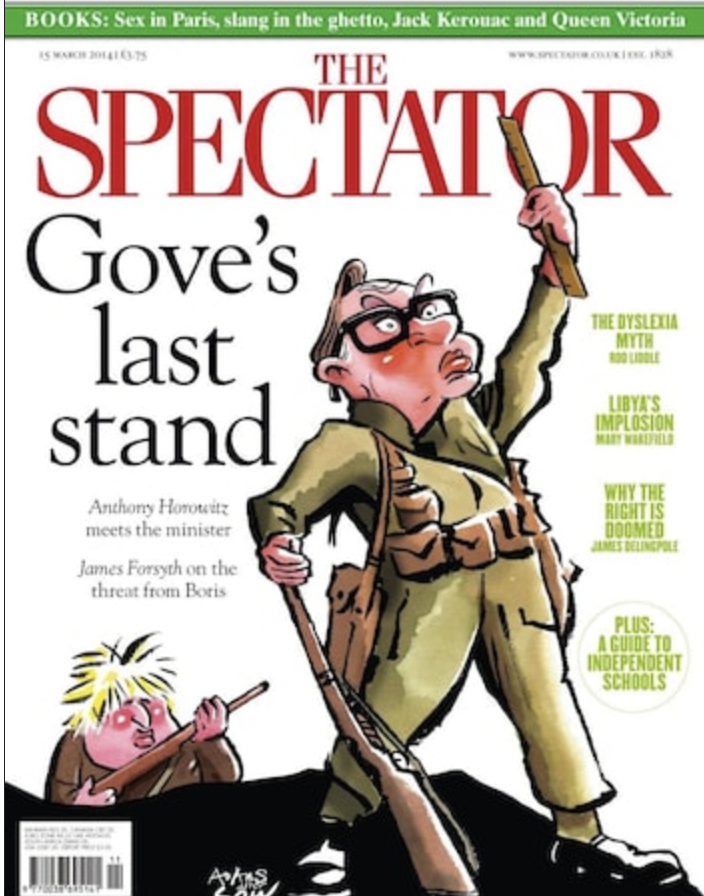








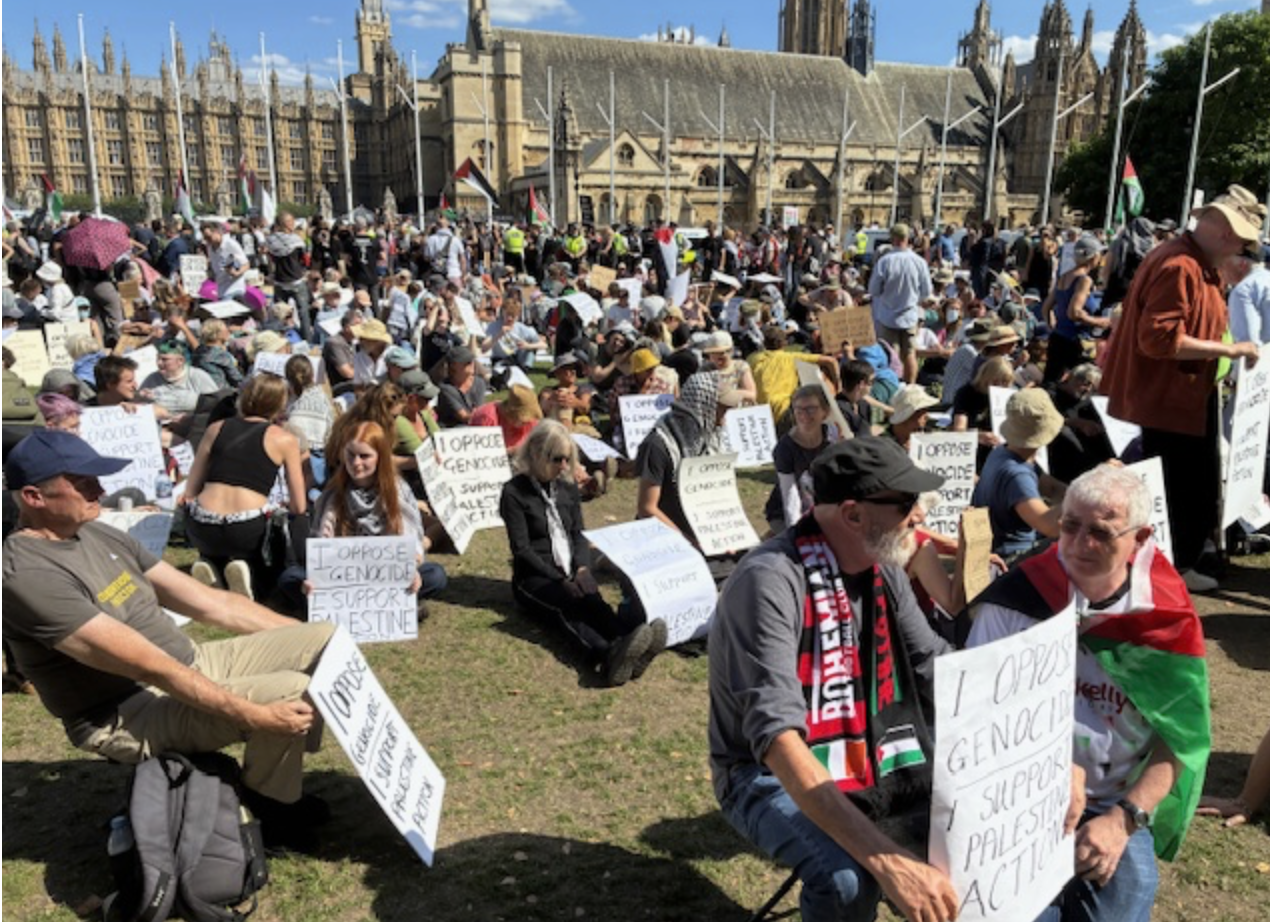
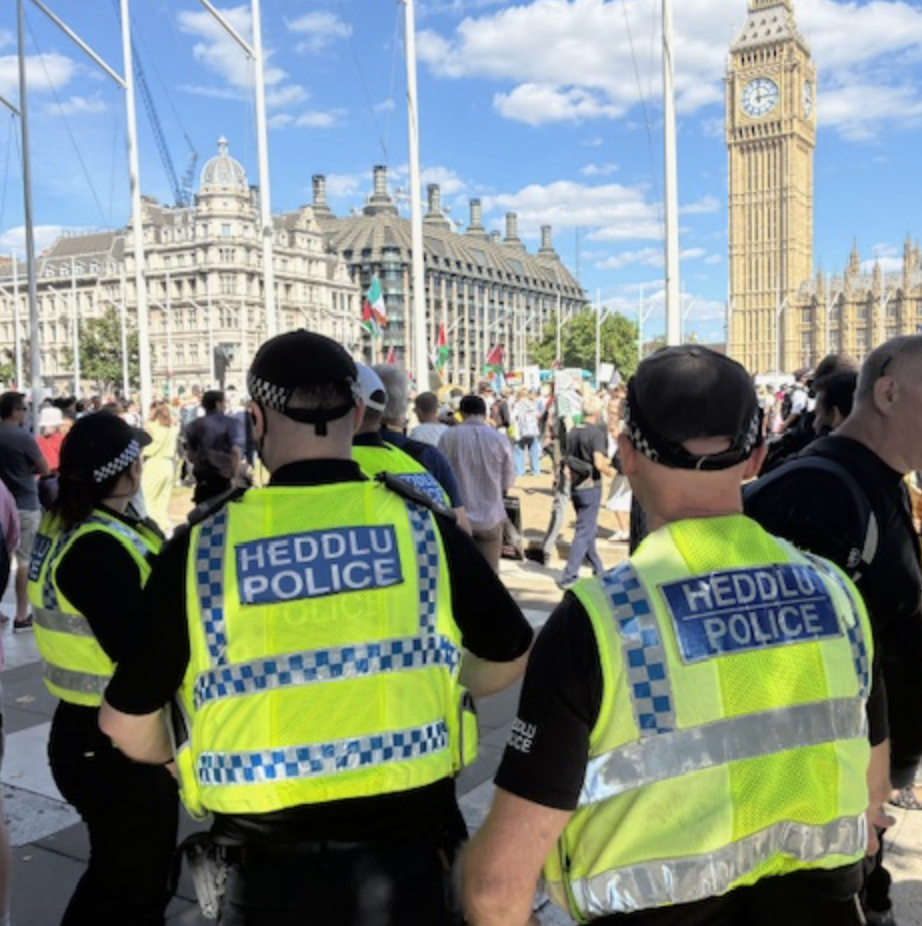
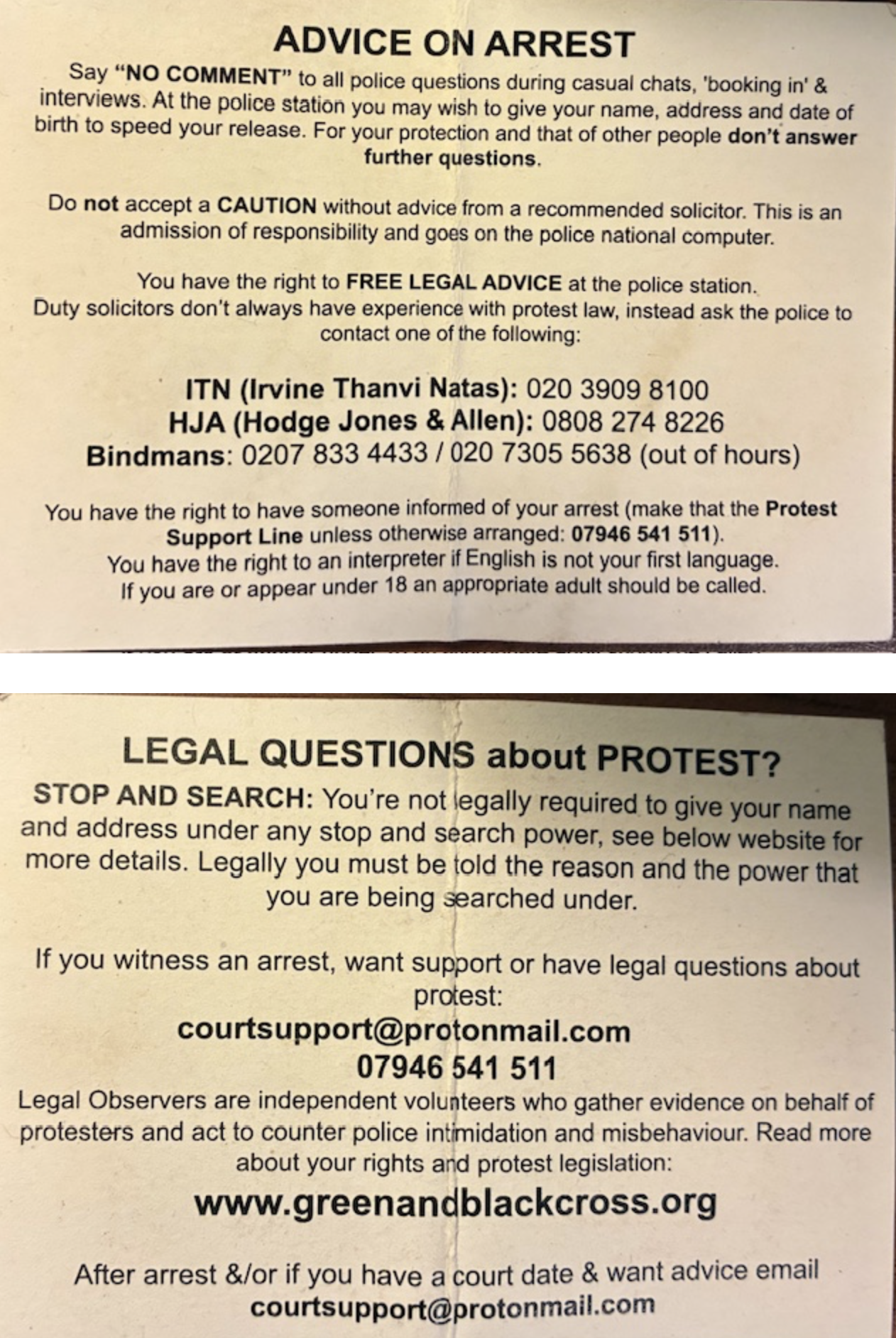
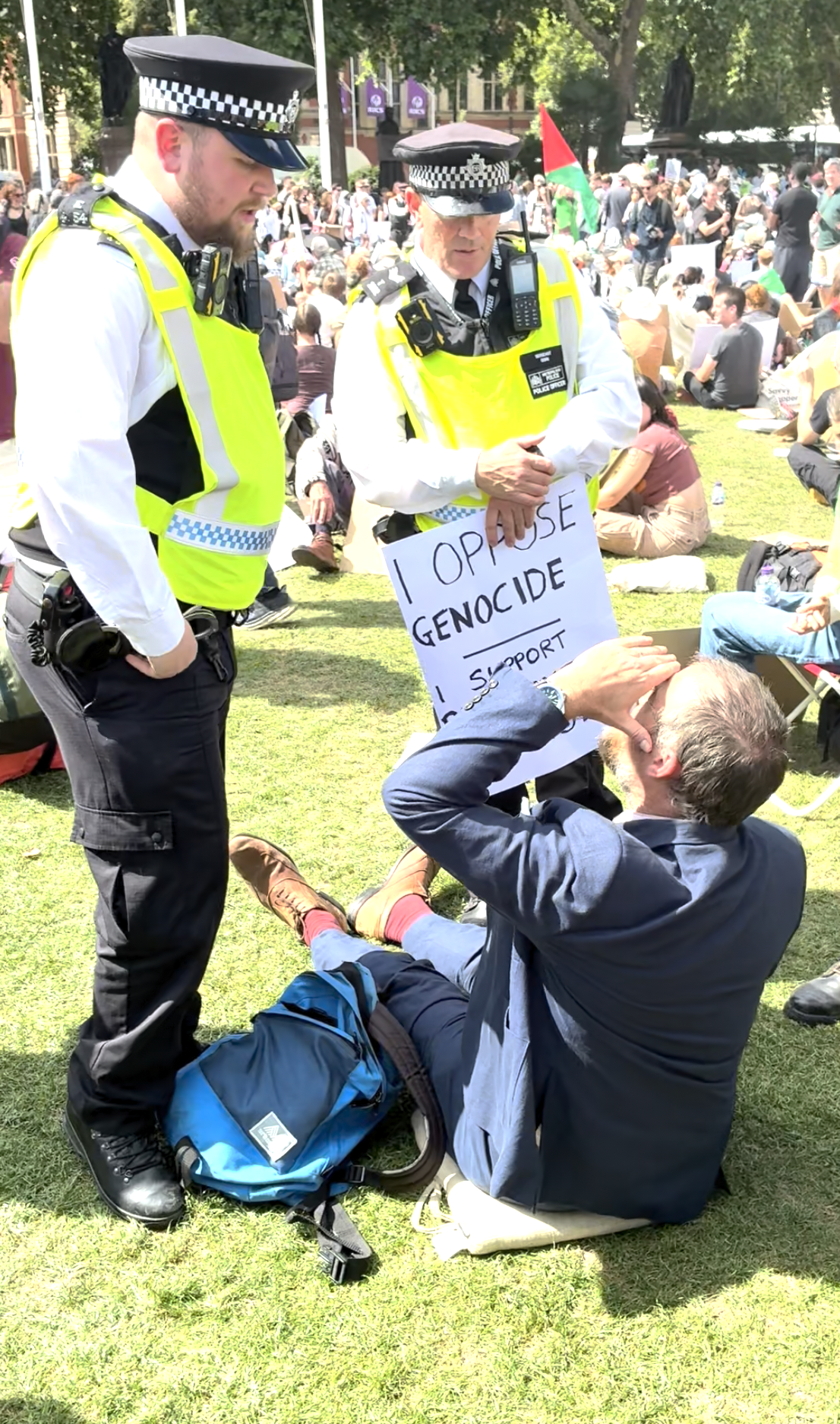
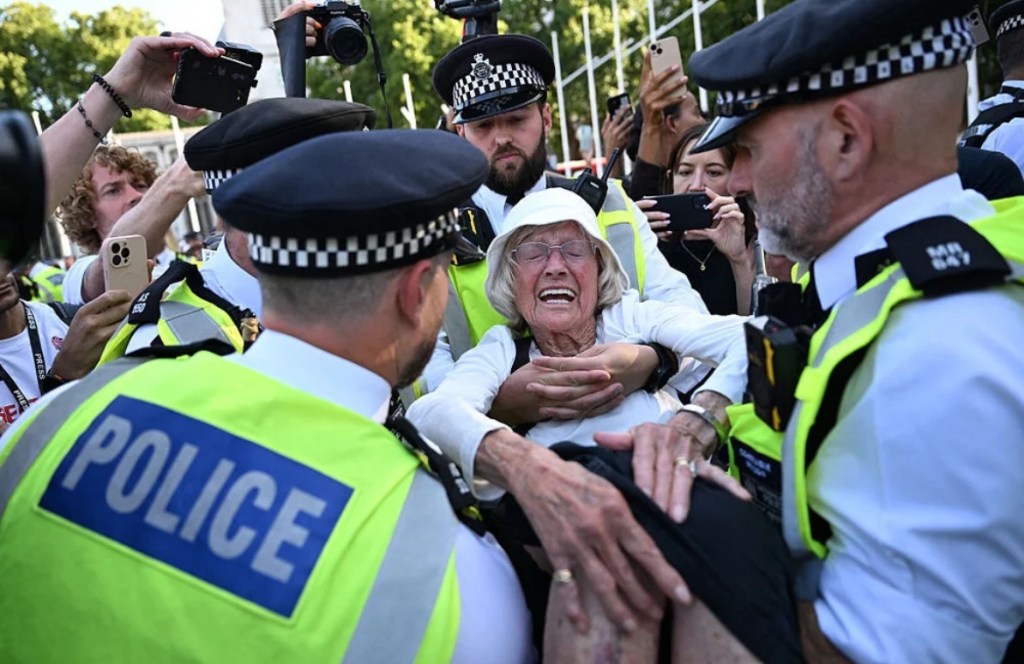


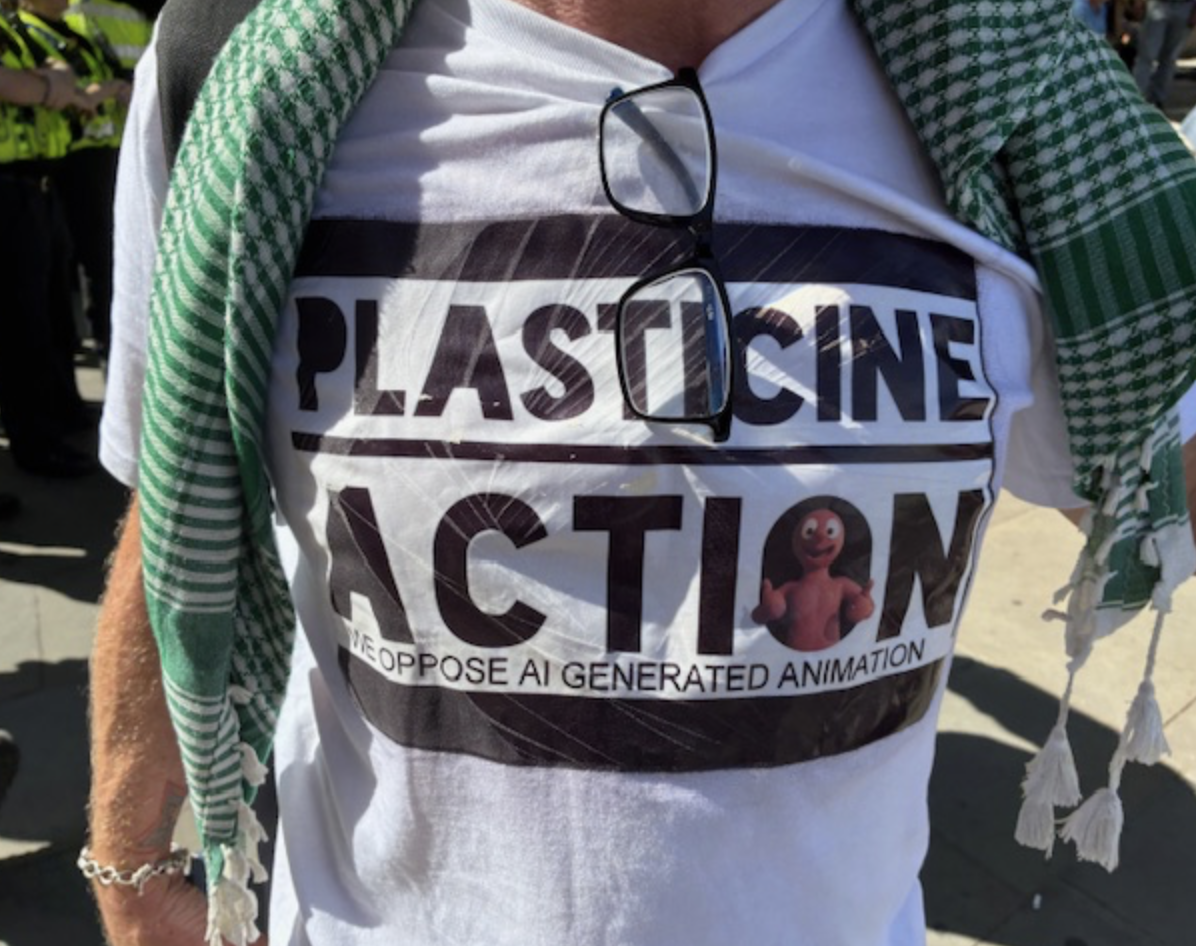
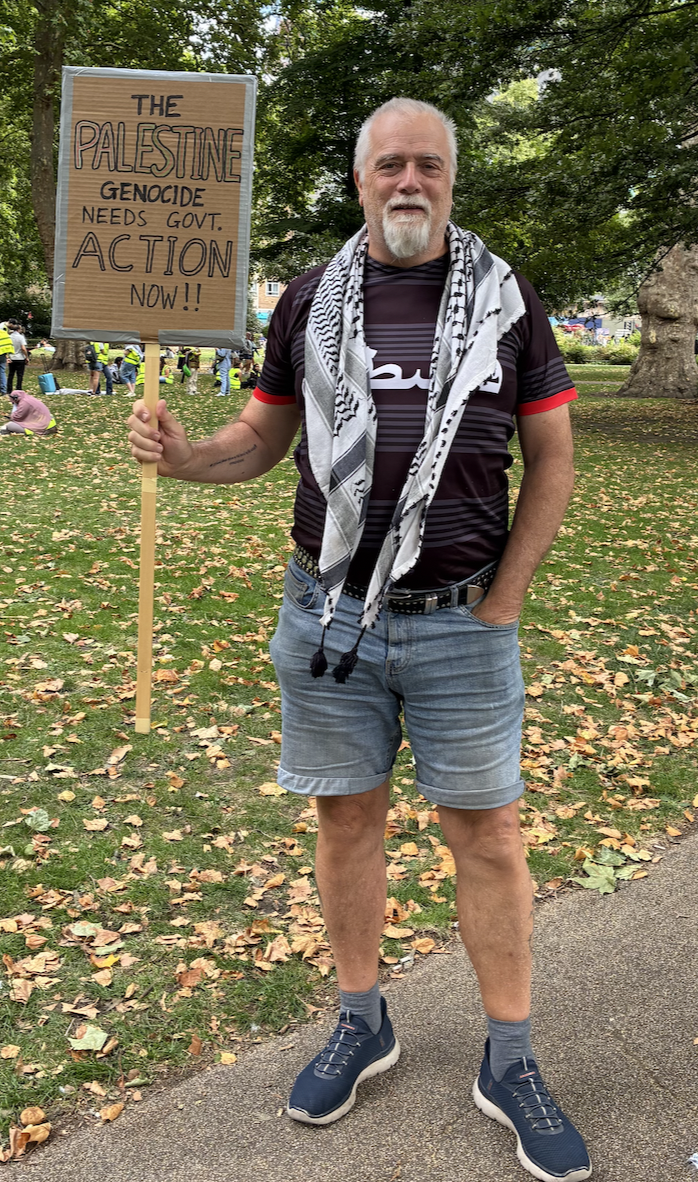











 Bridgend's Green Leftie